
BioBalance
A Personalized Gut Microbiome App for Weight and Wellness.
Role: UX Researcher, UX Designer
Tools Used: Figma Make, Figma
Introduction
Most weight loss apps focus on calories, exercise, and habit tracking.
But science increasingly shows something deeper:
our gut microbiome plays a major role in metabolism and weight regulation.
Yet most people have no way to understand this connection in their daily health routines.
Problem: Many people struggle with weight loss despite trying:
calorie counting
strict diets
fitness programs
Research suggests that gut bacteria influence metabolism, appetite, inflammation, and energy balance, which can impact body weight.
I wanted to explore:
What if a weight loss product helped people understand how gut health influences their metabolism?
That question became BioBalance.

Target audience
BioBalance is designed for people who want a deeper understanding of how their body responds to food, lifestyle, and metabolism, rather than simply tracking calories.
Primary Audience
Health-conscious adults (25–50) who are actively trying to manage their weight and are interested in improving their metabolic health. Many of these users already use fitness or nutrition apps but want more personalized insights beyond basic tracking.
Secondary Audience
Individuals who are exploring gut health, microbiome testing, or metabolic wellness and want a simple way to understand how their daily habits affect their body

The Opportunity
BioBalance explores how a digital product could help users:
• understand the role of gut health in metabolism
• track weight and medication together
• connect lifestyle habits with metabolic changes
• receive personalized guidance based on patterns
Instead of focusing only on weight numbers, the goal was to design a more holistic understanding of health.


Research Foundation
The project was grounded in scientific literature around gut microbiome research.
Key concepts that informed the product design:
Enterotype classification
Different microbiome compositions influence how individuals metabolize food.SCFA (Short-Chain Fatty Acid) production
Beneficial gut bacteria produce compounds that impact metabolism and inflammation.Gut barrier health
Microbiome imbalance can influence inflammation and metabolic disorders.These insights helped shape how BioBalance presents nutrition recommendations and microbiome insights.
Product Vision
The goal was to design a health platform that helps users:
Understand how their gut microbiome influences metabolism
Connect food habits with metabolic responses
Receive personalized nutrition recommendations
Track weight and medication progress
Access optional microbiome lab testing
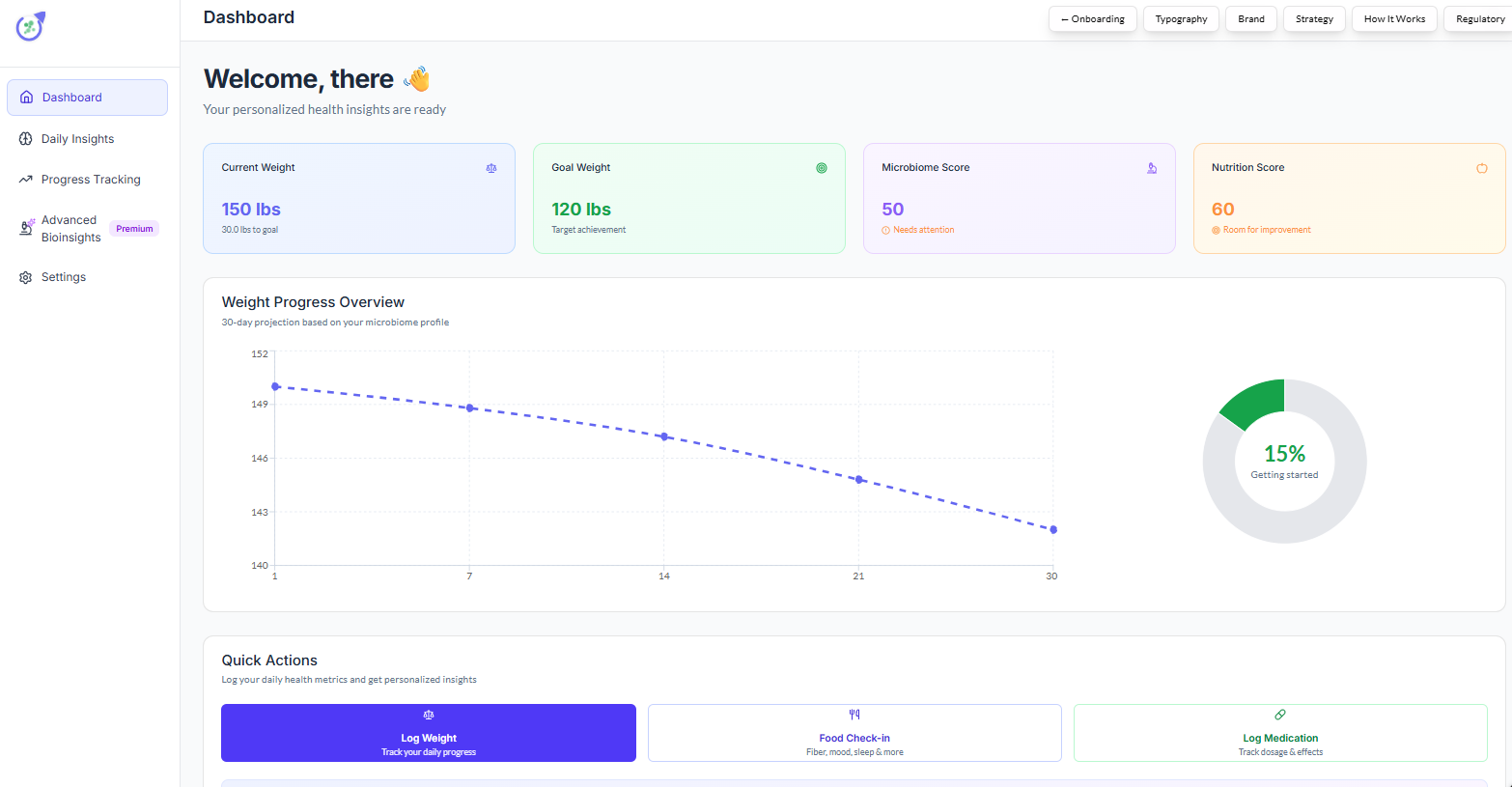
Competitive Analysis
Most weight-loss platforms focus on tracking or coaching.
BioBalance combines three layers of insight:
Behavioral data
Food habits, weight trends, and lifestyle patterns.Biological insights
Microbiome composition and metabolic markers.Actionable recommendations
Personalized nutrition and habit suggestions.
By connecting these layers, BioBalance shifts the conversation from:
“How many calories did you eat?”
to
“How does your body respond to food?”
Key Methodological Insights
Design Principles
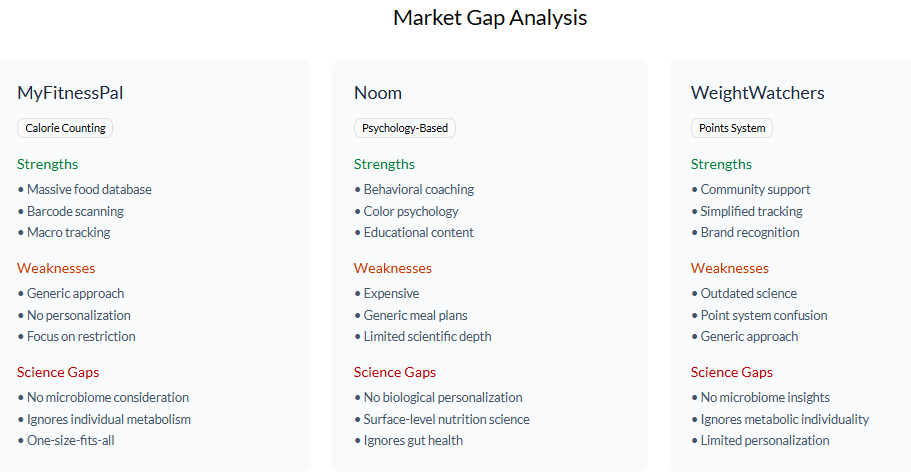
To ensure BioBalance delivers meaningful health insights, the product is grounded in three core methodological principles: research validation, predictive behavioral data, and actionable personalization.
Research-Driven Foundation
BioBalance is built on peer-reviewed microbiome and metabolic health research.
Scientific frameworks such as enterotype classification and microbiome diversity inform the product’s core logic.
The goal is to translate complex microbiome science into understandable user insights.
Questionnaire Intelligence
Since microbiome testing is not always available, structured questionnaires capture behavioral and lifestyle signals that correlate with gut health.
Questions collect data across diet, digestion, lifestyle, and metabolic patterns.
These inputs enable the system to approximate microbiome profiles and metabolic tendencies.
Actionable Personalization
Rather than only presenting health data, BioBalance converts insights into clear behavioral recommendations.
Users receive personalized guidance on nutrition, habits, and metabolic tracking.
The system focuses on small, actionable steps that can influence microbiome balance and weight outcomes over time.
Data Structure Design
Designing the Data Model
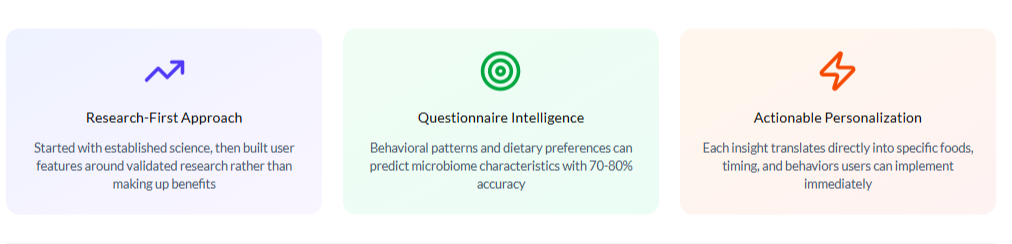
To transform microbiome insights into a usable product experience, I designed a structured data model connecting microbiome signals, user behavior, and personalized recommendations.
Profile Architecture
Each user profile stores structured inputs including health metrics, lifestyle data, questionnaire responses, and progress history.
These inputs form the foundation for generating personalized insights.
Personalization Engine
Questionnaire responses and behavioral signals feed into a logic system that identifies potential microbiome patterns and metabolic tendencies.
Based on this classification, the system generates tailored nutrition, habit, and lifestyle recommendations.
Progress Tracking System
BioBalance tracks multiple dimensions of user progress including:
Weight trends
Medication adherence
Behavioral changes
Habit completion
This allows the product to adapt recommendations over time as user behavior and health patterns evolve.
Product Experience and Key Features
1. Dashboard
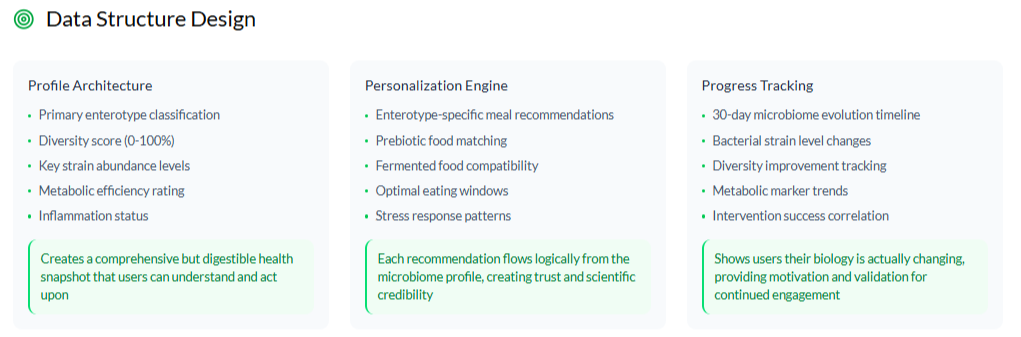
BioBalance is the first-ever app that combines weight tracking, medication support, and microbiome insights to give you a smarter, more sustainable path to your goals.
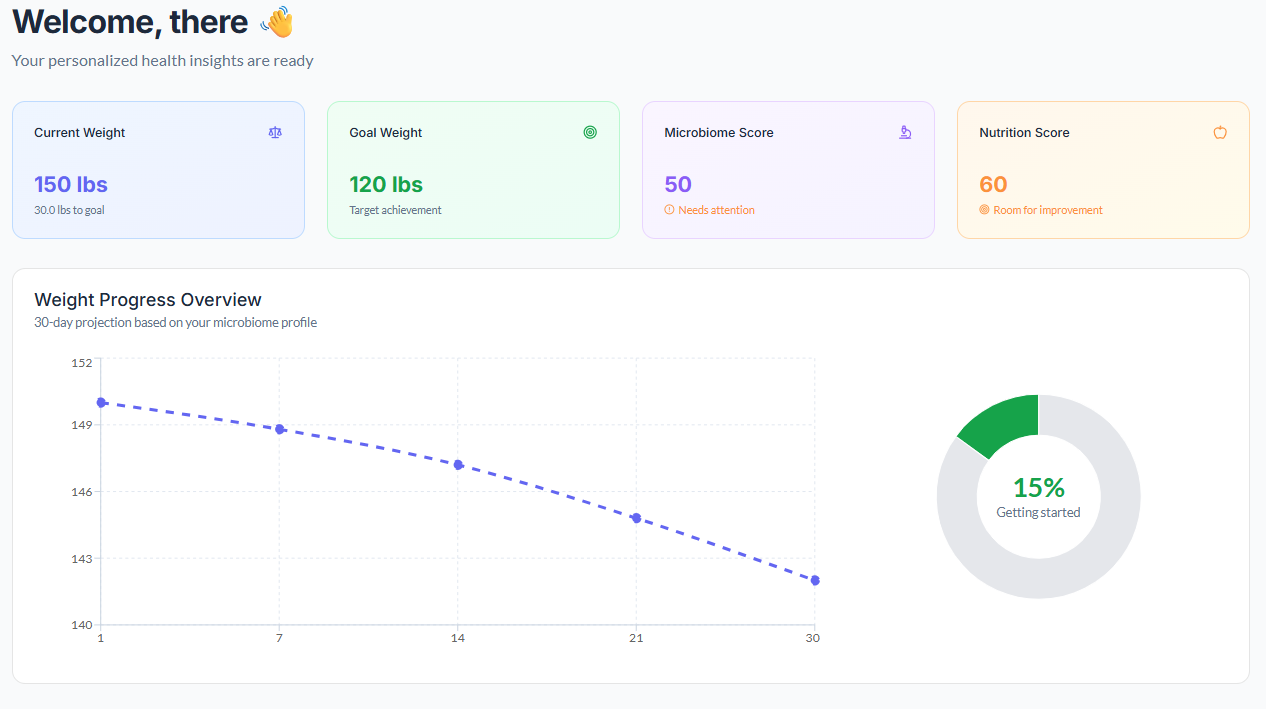
The BioBalance dashboard highlights four core metrics in one view: Current Weight, Goal Weight, Microbiome Score, and Nutrition Score. Users can instantly see their starting point, target, and overall health status, linking weight outcomes to gut health and diet quality in a simple, actionable way.
The “Weight Progress Overview” graph plots recent daily weights and projects 30 days ahead based on the person’s microbiome profile, not just a straight line from past weigh‑ins.
Quick‑action buttons for logging weight, checking in on food and lifestyle, and recording medication make it easy to update data in seconds, closing the loop between tracking, insights, and behavior change.
2. Health & Weight Tracking
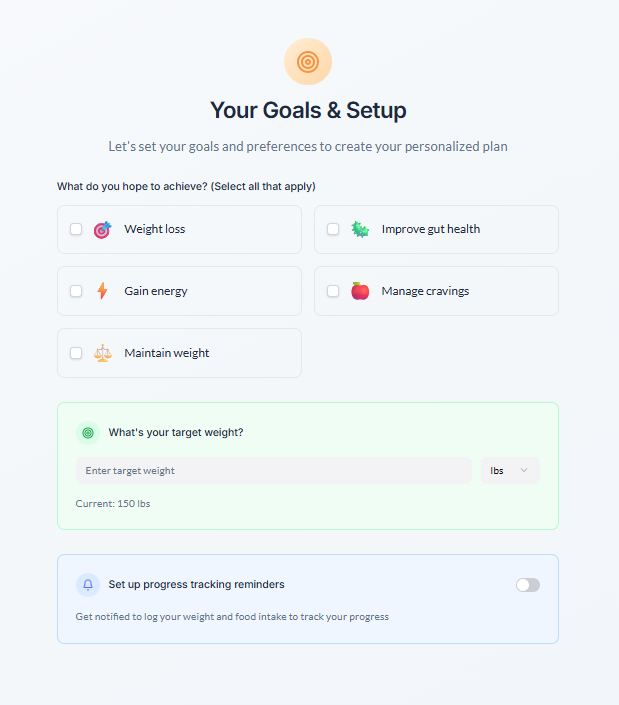
BioBalance provides a simple way for users to monitor key health indicators that influence metabolic health.
Key capabilities include:
Weight tracking to monitor long-term trends rather than daily fluctuations
Medication tracking for users managing metabolic medications or supplements
Habit tracking to capture daily behaviors that impact gut health
Progress visualization to help users understand changes over time
This system allows users to see how behavior changes influence metabolic patterns.
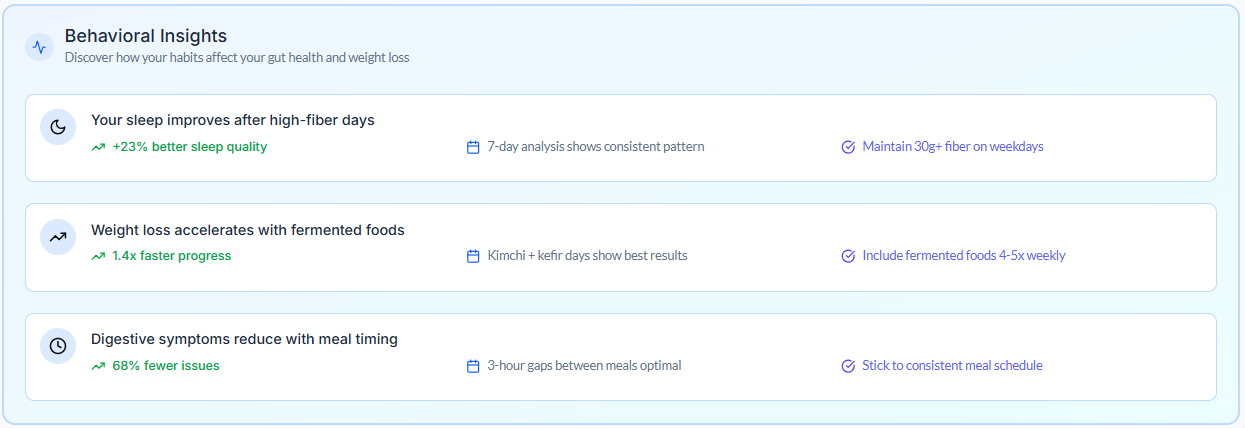
3. Microbiome & Metabolic Insights
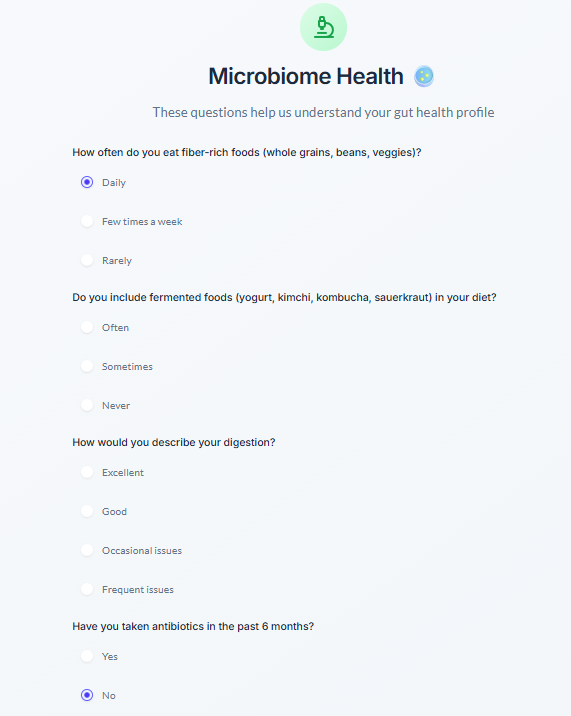
One of the core challenges of microbiome-based health tools is translating complex biological data into understandable insights.
BioBalance addresses this by:
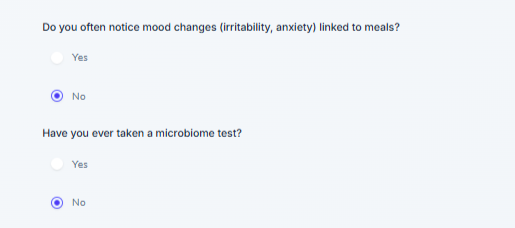
Identifying microbiome-related behavioral patterns from questionnaire responses
Providing digestible insights about gut health and metabolism
Explaining how lifestyle factors influence microbiome balance and weight regulation
Instead of overwhelming users with scientific data, the product focuses on interpretable insights and educational context.
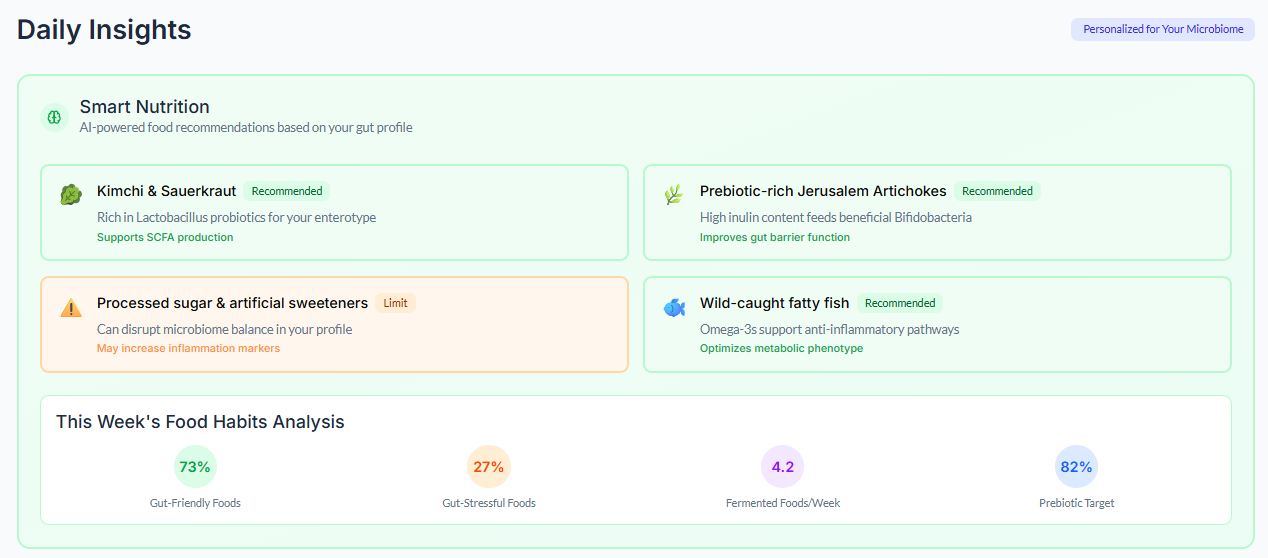
4. Personalized Recommendations
Based on the user's profile and behavioral data, BioBalance delivers personalized guidance designed to improve metabolic health.
Recommendations may include:
Nutrition adjustments tailored to potential microbiome patterns
Habit suggestions that support gut health and digestion
Lifestyle improvements related to sleep, stress, and physical activity
The emphasis is on small, achievable changes that users can integrate into their daily routine.

Design Challenges & Tradeoffs
Building BioBalance involved balancing scientific accuracy, usability, accessibility, and technical implementation constraints. Several challenges influenced key product decisions.
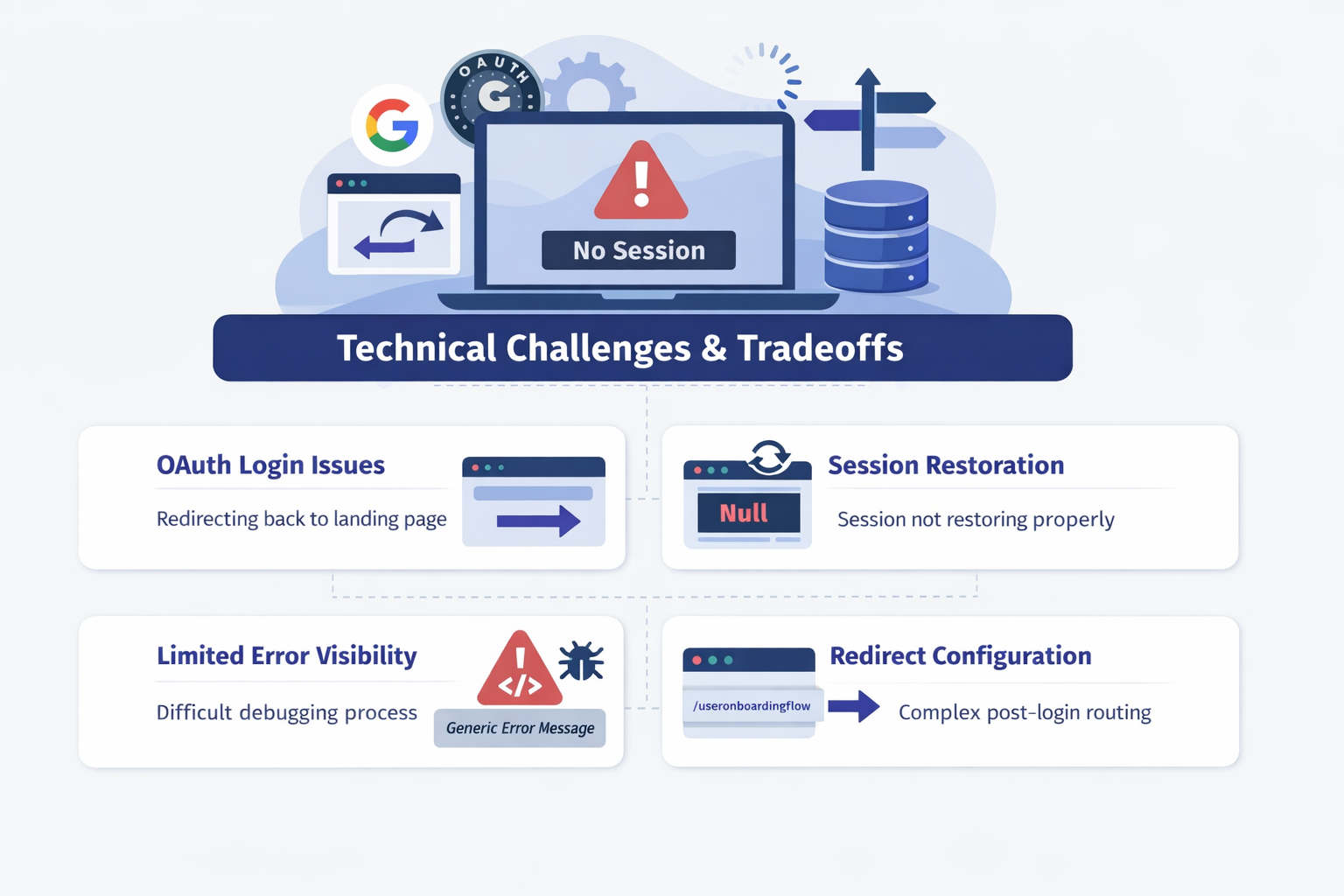
Technical Challenges
During development, several authentication and routing challenges emerged:
OAuth login flows occasionally redirected users back to the landing page rather than continuing into onboarding.
Session restoration issues caused auth.getSession() to return null until the page was manually refreshed.
Limited error visibility made debugging difficult due to generic console messages.
Redirect configuration complexity required experimentation across both authentication settings and application routing.
Tradeoff
While the integrated environment accelerated product experimentation, authentication flows and session management required additional troubleshooting compared to traditional development setups.
Product Impact & Future Opportunities
BioBalance demonstrates how scientific research, behavioral data, and product design can work together to create a more personalized health experience.
Product Impact
The product concept highlights several potential user benefits:
Helps users understand the relationship between gut health and weight management
Translates microbiome science into practical daily actions
Encourages long-term behavior change through personalized guidance
Combines tracking, education, and recommendations within a single health ecosystem.
Future Opportunities
Several opportunities were identified that could further expand the product’s impact and deepen personalization.
Microbiome Test Integration
Integrating real microbiome testing data was identified as a key opportunity to enhance the accuracy of personalized insights and recommendations.
AI-Powered Recommendation Engine
Machine learning could be used to refine recommendations by analyzing behavioral patterns, user progress, and health outcomes over time.